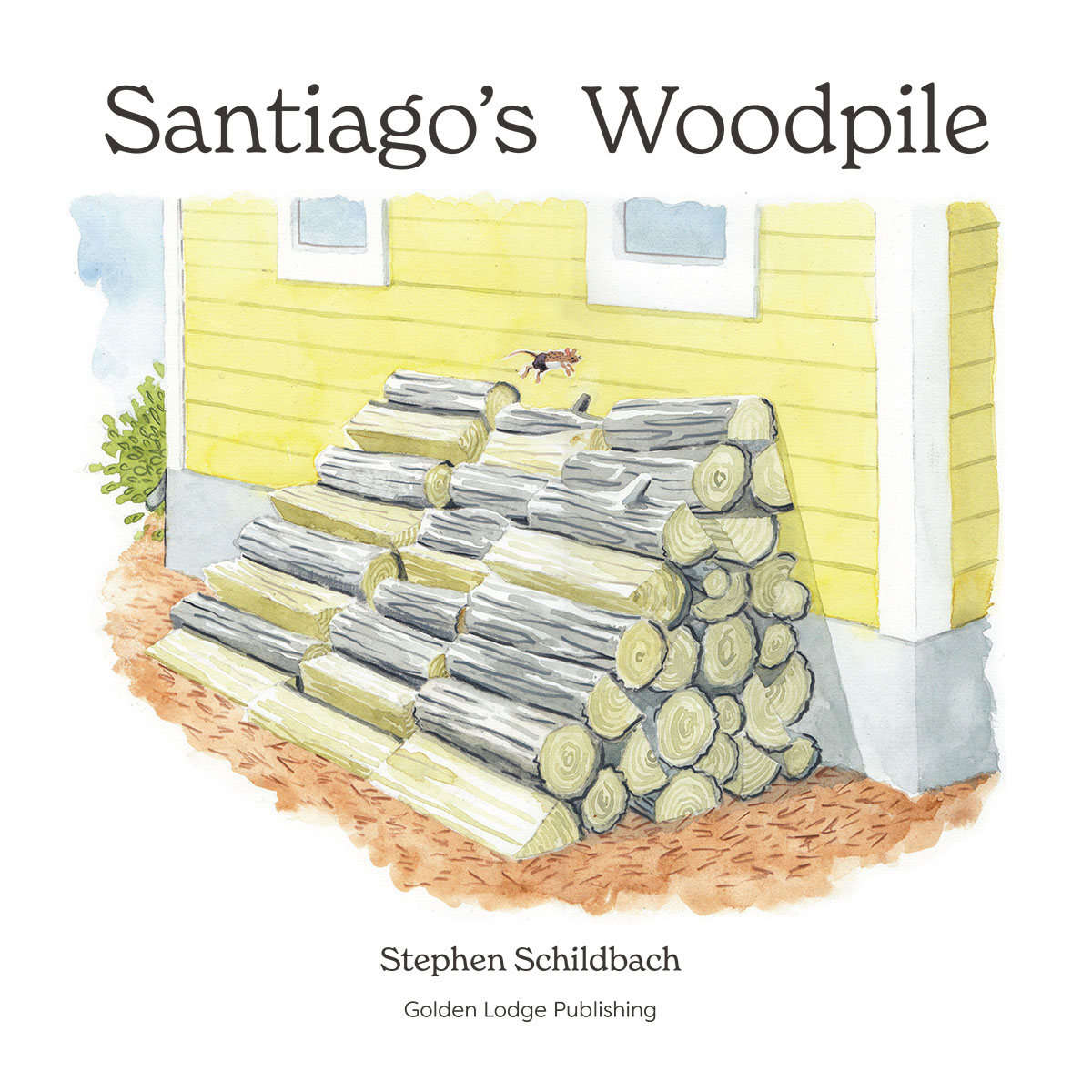
The Long Journey toward Self-Publishing the Children’s Book Santiago’s Woodpile
Impracticality is deciding to write and illustrate a children’s book while working a full time job. I’ve never written a children’s book. And, long gone is an illustration career that once provided my full income. I’m a full time web designer, and have two children to support with my wife. The available time to self publish a children’s book could only be found in small increments.
However, being a creative person, making things can be a sort of addiction. The personal desire to both author and illustrate my first children’s book mid-life occurred from reading to my children. I was also motivated by the thought that my youngest child would enjoy the book and I would get fulfillment reading it to him.
This article is for artists wondering if there is another way to make some income atypical from the many hours we spend marketing on social media. I spend a lot of time researching how to make a living as an artist. The advice I get quite often is to post on Instagram or another social media platform consistently and frequently. As most of you know this takes hours of time each week. This activity never feels right to me. I have the past experience of making a full-time living as an illustrator in the 90s and 00’s by simply advertising in one illustration book, and sending out a postcard once a quarter. That was all the marketing I had to do. The time it took was a fraction of the time that artists, especially young and new artists, spend on social media today.
During my first career cycle as an illustrator spanning several years, the majority of commissions I received were from publications–editorial work. My work lends itself to editorial illustration, but this second phase of my illustration career, I’m trying something different, expanding into new fields, some having to do with advertising.
An illustrator at the beginning of their career asked me “what makes an illustration, an advertising illustration?” You can’t give a black and white answer to that question, but there are certainly repeating parameters placed on an advertising campaign, and the illustration must integrate with the advertising concept and successfully sell the product.
1. Following the Brand’s Color in and Advertising Illustration
An art director called me from T Mobile for an illustration assignment, and the number one thing I had to follow was the hot pink used in their brand. And, I wasn’t allowed to use a lot of colors with it. Obviously, this is not a requirement for all advertising illustration, but be aware of the brand colors and use them. The illustrations I’ve done for this article, has pink too, but no connection to T Mobile. That assignment was unfortunately canceled by people making decisions out of my control.
2. Graphic Shapes
I love texture and smear in fine art and illustration, but rarely will you see misty textured art in an advertisement. Although the illustration above has some texture and smear, the shapes of the trees and skier are still graphic shapes created with bold lines and simple objects. Visually simplistic illustration styles are commonly used in advertising illustration, because the imagery must grab the viewer quickly. In today’s fast past world, people don’t have time to look at a complex image. We hear this to the point where it is a cliché, but is true.
3. Keep it Happy, Show Success
I also love moody art and music, but the truth of the matter is conveying anything somber in an advertisement is not going to make people want to buy the product. It is rare that illustration is used in advertising, even rarer that a somber style would be called upon for an ad unless mental health was the topic and medication was the topic. The majority of advertising illustrations you will see are light in mood, or even comical, and almost always emotionally make us feel good.
4. Originality, But Not Too Original
You may see a groundbreaking campaign now and again, but those are rare. Most advertising campaigns are derivative of past concepts repackaged. The illustration styles art directors pick are going to be original, but not too original. This is a hard one to explain, but it is this magical combination of the illustration reminding us of something that makes us feel comfortable, but surprises us with aspects of it’s originality. Obviously, it depends on the client as to where on the scale the client falls from conservative comfort to a radical challenge.
It’s in the Data
Data controls what advertisers decide more than ever. Advertising agencies used to run on intuition (think Mad Men) and some data before data became so ubiquitous in the 21st century. Now advertising agencies follow the data primarily, with a little intuition added in.
So, here is the hard news for us creative types—illustration will be used as long as the data supports it sells products. There is little we creatives can do about that cold, hard fact. Even, though I call this a “cold, hard fact” I hope I’m wrong, meaning—I hope intuition is still strong in advertising. I say this because intuition is linked to creativity and I like both of those human characteristics much more than data.
The Rise and Fall of Trends in Advertising
One reason I left illustration in 2008, was because it was not being used or valued due to the proliferation of tech, and downturn of the economy. Illustration in 2018 is a hopeful time where I open the New York Times and see illustrations in almost every section, and used on websites as a part of a business’ brand. In 2017, just when I had seen one too many childlike robot cartoon figures on a website, Mailchimp came out with a new branded image with illustrations that redefined what a brand can be.
Mailchimp’s new look is one of the most radical expressions of Brand I have seen in years! Just when I started to wonder if the advertising images were a message that we were all turning in to little innocent, robotic avatars, Mailchimp brought humanism back and influenced others to bring back humanism as well. Dropbox followed suit with a new brand with illustration. Google has always been using illustration for their home page (I think you know the link by heart). These trends change frequently, about every 3 years. But, for now, I’m in my happy place. Keeping it human and creating art.
The “visual safety” and affordability of stock photography has created a homogenized aesthetic across the web. To make a unique visual impact, try applying illustration. Hire Stephen Schildbach or support any illustrator you like, to provide something unique and heart felt to your businesses’ online presence.
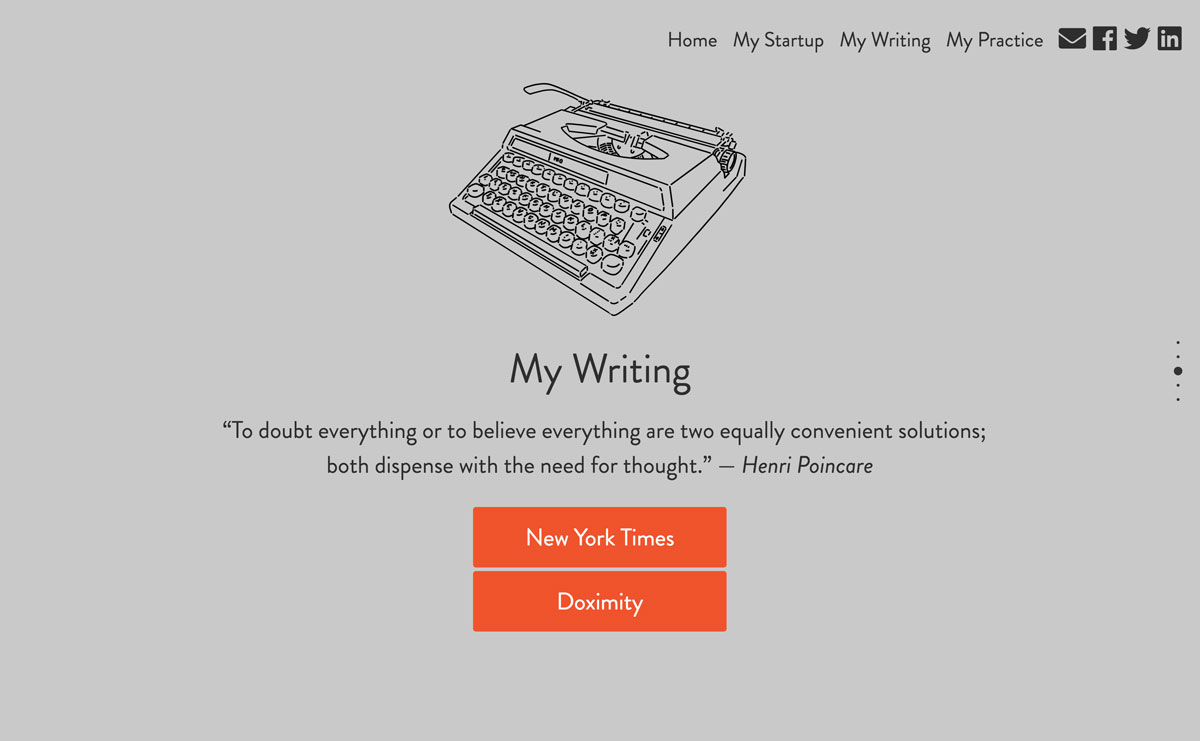
This is a panel from Vatsal Thakkar’s personal site. A one page website with 3 of my custom illustrations. I also designed and developed the website.
The Versatility of Illustration
Illustration has elements of versatility that a photograph does not. Photographs are mostly constrained to a rectangle or circle. Illustration can float or silhouette over a color as seen above. This illustration integrates with the design instead of being a separate shape or color from the design.
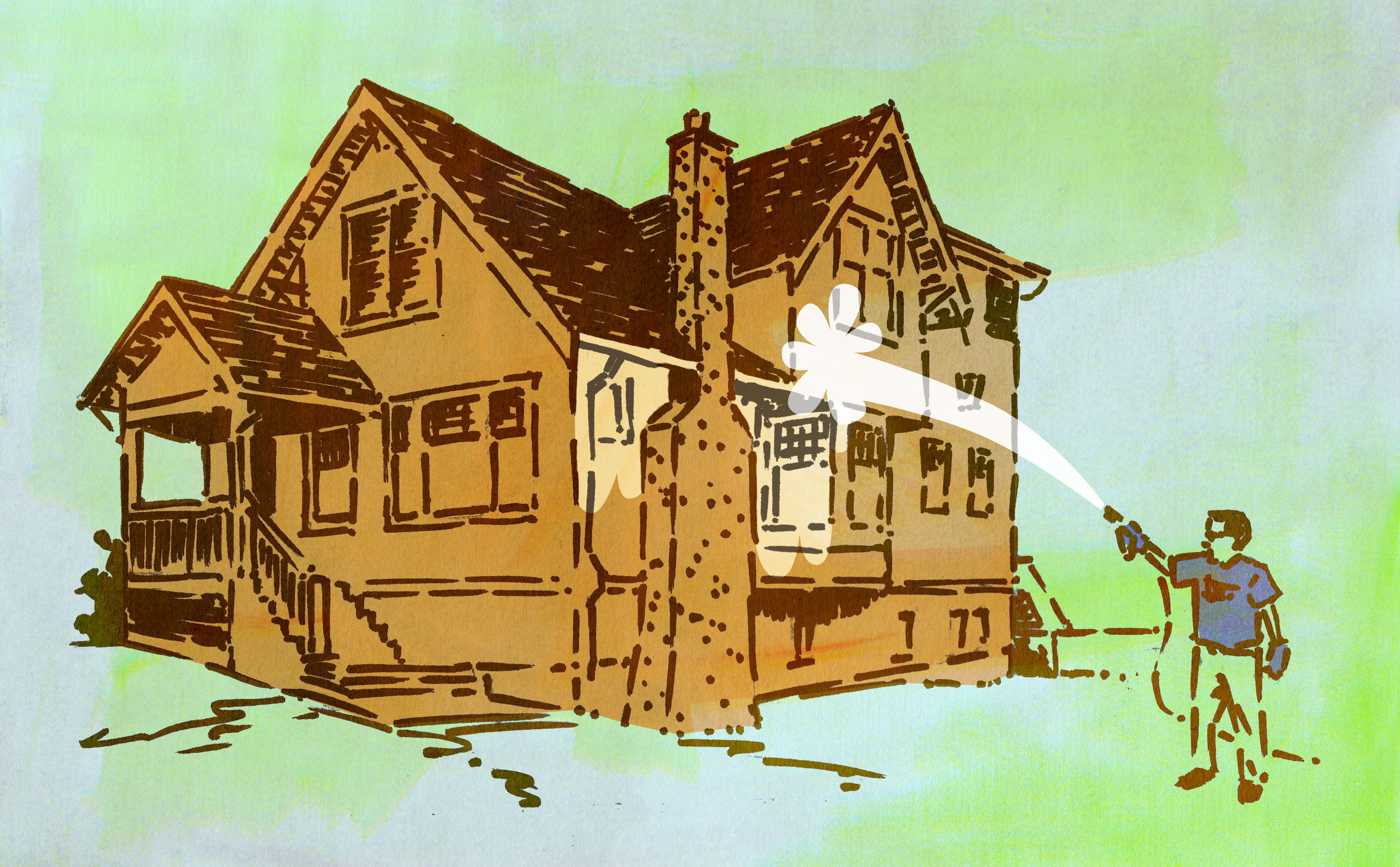
This illustration was used to illustrate how A.C. James Company cleans it’s client’s houses. I also designed and developed the site in WordPress.
Visually showing how our business looks may not be very visually appealing, or maybe we don’t have good photographs of our work. An illustration can be a more imaginative way of looking at the work we do by modifying the colors to convey a mood, or idealizing a situation.
Icons that identify the labs at the University of Washington’s Center For Precision Diagnostics. I also designed their website in WordPress.
Graphic Illustrative Icons
Font Awesome is the best resource for thousands of graphic icons. But, if you have need for a series of unique graphic icons to identify the pages or sections of your site, ask an illustrator to come up with something unique. Graphic illustrative icons are a great way to identity your content and create a cohesive identity for your business.
Contact me about how illustration can apply to your website.
10 Years is a long time to take off from something you once loved to do. There were so many reasons for my leaving illustration and art behind. When you do anything all the time, you risk burnout, and one of the downfalls of being an illustrator is your creative profession can turn in to an assembly line. I burned myself out.
Also, technology, stock agencies, and recessions were devaluing illustration in the early 2000’s. Suddenly my custom illustrations were in competition with $5 stock art. We see this problem everywhere in fields that involve creativity. Now you can get a logo for $5. Some of us remember a different time. A time when individual creatives enjoyed the many hours of labor behind making something useful and beautiful, and were compensated with a livable wage.
Although my reasons for getting back in to illustration are personal, it is also nice to see this recent resurgence in illustration in new venues. Now we see illustrators selling illustrated products on Etsy. We see Patreon donors serially donating to illustrators who agree to provide a weekly illustration that they will one day provide as a compiled book. There are companies using illustration on their blogs, packaging, and collateral. Even though the field continues to be highly competitive, there seems to be more opportunity that a decade ago.
The past decade I have run a web and print design business called Schildbach Design, and still do. Although I do like providing web design for my clients, it demands more of my technical abilities and business sense, than it does my creativity. My web design business will certainly stay open for the foreseeable future, but I’m excited about bringing back making unique imagery in illustration.
I’m coming back to illustration with the spirit of why I originally did illustration in my 20’s. The reasons are multifaceted: Visual communication with a human touch. Telling stories. Feeling something from the art I create. Hopefully, getting others to feel something from the illustrations I create. Bringing beauty and soul back into our rushed and overly task driven lives.
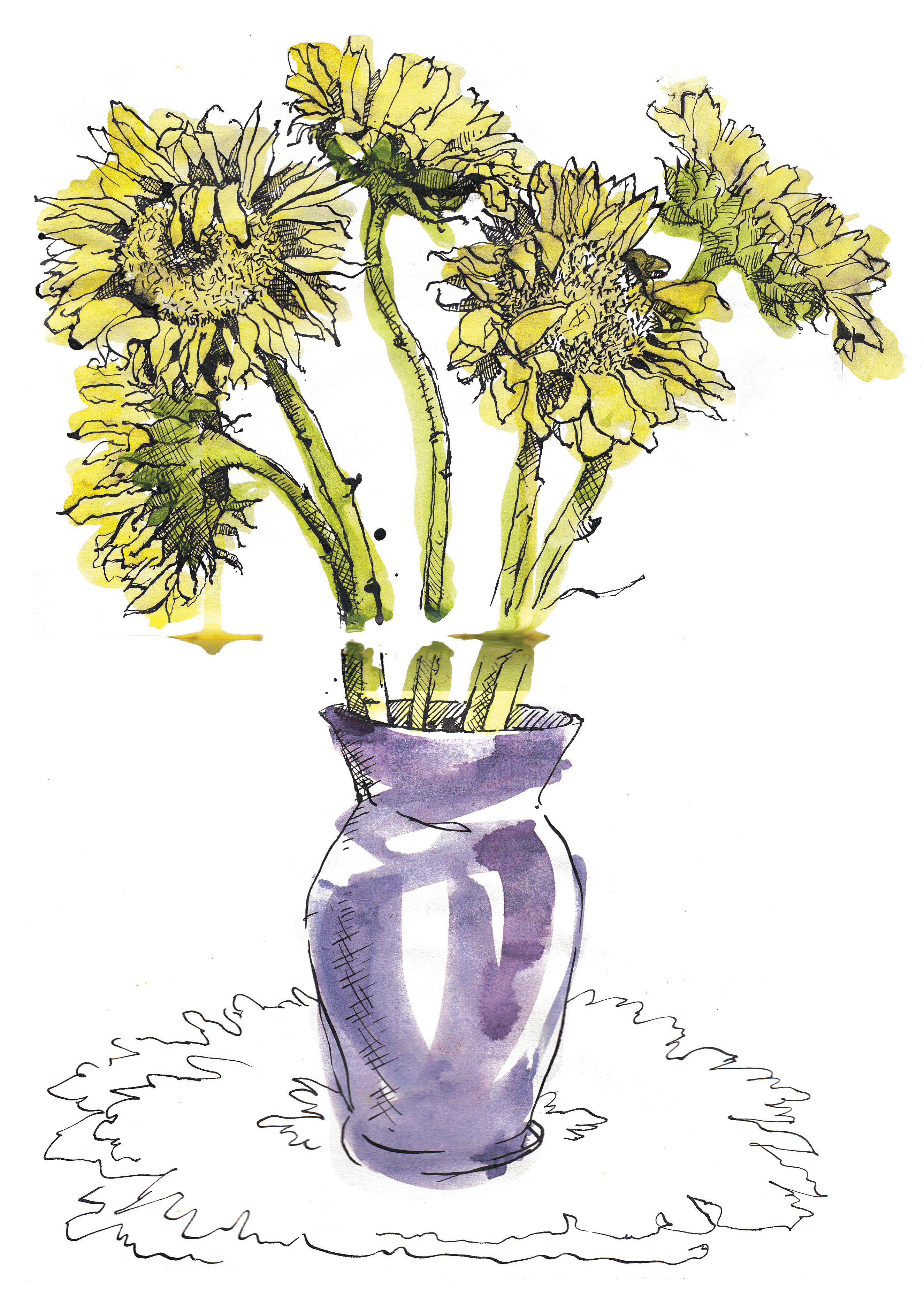
It starts with the sketch I did of the vase of sunflowers I watched transform daily at the dinner table.